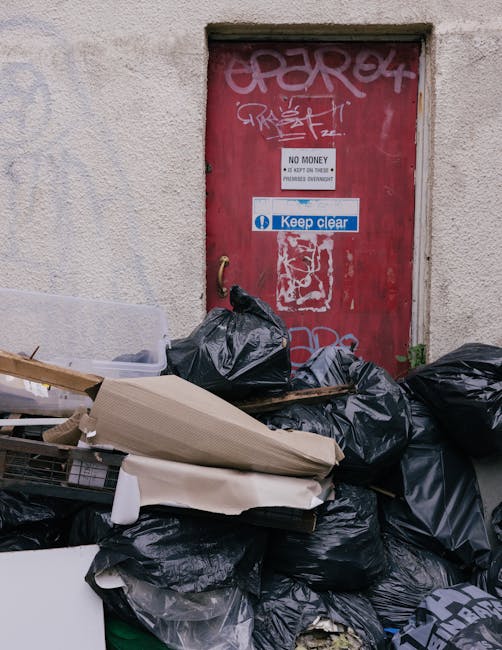
Compare rubbish removal quotes North West London real cost
If you are trying to compare rubbish removal quotes North West London real cost, you are probably looking at a mix of prices, promises, and fine print that all seem a bit too vague. Fair enough. One company says "cheap", another says "same-day", and a third looks reasonable until the extras appear. In North West London, that can happen fast, especially when access is awkward, parking is tight, or the load is heavier than it first looked.
This guide breaks down what rubbish removal quotes really mean, why one quote can be much higher than another, and how to judge the real cost before you book. We will also look at common hidden charges, local factors that affect pricing, and the practical steps that help you choose confidently. No fluff. Just the stuff that actually saves you money and stress.
Sometimes the difference is simple. Other times, not so much. Let's make it clearer.
Table of Contents
- Why Compare rubbish removal quotes North West London real cost Matters
- How Compare rubbish removal quotes North West London real cost Works
- Key Benefits and Practical Advantages
- Who This Is For and When It Makes Sense
- Step-by-Step Guidance
- Expert Tips for Better Results
- Common Mistakes to Avoid
- Tools, Resources and Recommendations
- Law, Compliance, Standards, or Best Practice
- Options, Methods, or Comparison Table
- Case Study or Real-World Example
- Practical Checklist
- Conclusion
- Frequently Asked Questions
Why Compare rubbish removal quotes North West London real cost Matters
Comparing rubbish removal quotes is not just about picking the lowest number. It is about finding the real cost once labour, vehicle size, waste type, access, and disposal are all taken into account. In North West London, that matters even more because a job in a narrow street in Hampstead can look very different from one with easy driveway access in Mill Hill.
The price you see first is often only the starting point. A quote can change if the team has to carry waste down several flights of stairs, work around restricted parking, or deal with items that need special handling. That is where people get caught out. The headline looks good, then the invoice tells another story. Annoying? Very.
Getting a clear comparison helps you spot fair pricing, avoid overpaying, and reduce the risk of delays on the day. It also helps you decide whether you need a full clearance service, a one-off collection, or a more specific option such as rubbish removal, rubbish collection, or a broader waste clearance approach.
There is also a trust angle. A quote that is clear, itemised, and realistic usually tells you more about the business than a bare minimum number ever will. If you are comparing several providers, the one that explains what is included often ends up being better value, even if it is not the absolute cheapest.
Key takeaway: the real cost is not just the quote amount. It is the amount you actually pay after access, labour, disposal, and any extras are properly accounted for.
How Compare rubbish removal quotes North West London real cost Works
The process is simple in theory and a bit messy in practice. You request quotes, give details about the waste, compare what is included, and choose the best fit. But the quality of the comparison depends on how much useful information you provide up front. A vague message like "need some rubbish gone" may get you a quick reply, but not a reliable price.
A better quote request includes the type of waste, approximate volume, whether the rubbish is outside or inside, how many floors are involved, and whether there are access issues. Photos help too. In our experience, a couple of clear pictures can prevent a lot of back-and-forth later. It is one of those small things that saves everyone time.
Most rubbish removal quotes are built around a few core factors:
- Volume: how much space the waste takes in the truck, often the biggest pricing factor.
- Weight: heavier materials can raise disposal costs.
- Type of waste: mixed household waste, furniture, garden waste, builders' waste, and electrical items may be priced differently.
- Access: stairs, long carries, parking restrictions, or basement access can add labour time.
- Urgency: same-day or short-notice collections may cost more.
- Disposal route: responsible sorting, recycling, and licensed disposal all affect the price.
This is why two quotes for what seems like the same job can be miles apart. One company may be assuming easy access and a small load. Another may be building in time for a tricky collection and proper disposal. Neither is automatically wrong, but only one may reflect your actual job.
If you are comparing services in specific parts of the area, it can also help to look at local pages such as North West London coverage or nearby locations like Camden, where parking and access can be a very real part of the job.
Key Benefits and Practical Advantages
The biggest benefit of comparing quotes properly is control. You move from guessing to deciding. And that is a big difference when you are already dealing with clutter, moving house, a refurb, or a clear-out that has got out of hand a bit.
Here are the main advantages:
- You avoid hidden charges. Clear comparison makes extras easier to spot before booking.
- You budget more accurately. You are less likely to be surprised on the day.
- You match the service to the job. A small domestic collection should not be priced like a full house clearance.
- You get better timing. The right quote often means fewer delays and fewer awkward conversations at the kerbside.
- You can compare value, not just price. Disposal method, labour, and service quality all matter.
There is also a practical peace-of-mind benefit. When the team turns up and already knows the access details, what needs lifting, and whether the waste is mixed or separated, the whole thing feels calmer. No chasing. No "oh, we didn't realise".
That can matter more than people think, especially if you are trying to clear a flat before a tenancy deadline or get a garden ready before the weather turns. It is just easier when the quote is honest.
Who This Is For and When It Makes Sense
This approach makes sense for homeowners, tenants, landlords, letting agents, small businesses, and anyone dealing with bulky waste in North West London. Truth be told, it is often the people with the least time who benefit the most from a good comparison process.
You will find it especially useful if you are:
- Clearing out a flat after a move or tenancy change
- Getting rid of old furniture, mattresses, or appliances
- Dealing with garden waste after a tidy-up
- Handling office clutter or redundant stock
- Managing builders' debris after light renovation work
- Trying to compare a rubbish removal quote against council collection or skip hire
It also makes sense if you are in an area where access is limited. Streets around parts of Kentish Town, Belsize Park, or St John's Wood can be busier than people expect, and the way a vehicle can stop, load, and leave may influence the price more than the waste itself. Sometimes that is the whole game.
For larger clearances, you may want to compare specialist options too, such as house clearance, flat clearance, or more targeted services like garage clearance and furniture disposal. The right fit often depends on the type of clutter, not just the amount.
Step-by-Step Guidance
Here is the simplest way to compare quotes without getting lost in the numbers.
- List exactly what needs removing. Be specific. "Three sofas, one wardrobe, six black bags, and some broken shelving" is much better than "general rubbish".
- Take clear photos. Get a wide shot and a few close-ups. If the waste is indoors, show the route to the exit if possible.
- Note access details. Mention stairs, lifts, parking restrictions, entry codes, gated access, or long carry distances.
- Ask what is included. Labour, loading, disposal, VAT if applicable, and any stair or access charges should be clear.
- Check whether the quote is fixed or estimated. A fixed quote gives more certainty, while an estimate may change if the load is different from what was described.
- Compare like with like. Do not compare a quote for mixed waste collection with one for a full clearance unless they cover the same scope.
- Look for disposal clarity. Responsible companies should explain what happens to the waste after collection.
- Confirm timing. A lower price is less useful if the collection window does not work for you.
A practical little tip: if one quote is much lower than the rest, ask why. Sometimes it is a genuine deal. Sometimes it means something has been left out. That is not being suspicious. That is just being sensible.
If you are comparing collection methods, you may also find it helpful to read up on waste collection and waste removal options so you can see what level of service actually matches your situation.
Expert Tips for Better Results
There are a few small habits that make a big difference when you want a fair quote.
Give the full picture from the start
People often leave out the awkward bit. The stairs. The basement. The "actually, there are two extra bags in the shed". But that is the bit that changes the price. If you mention it early, the quote is usually much more reliable.
Ask about waste sorting
Mixed waste can be more expensive to process than separated materials. If you can split garden waste, cardboard, metal, or reusable furniture before collection, it may help reduce the final cost. It can also make the job quicker. A win on both sides.
Check whether the team handles loading
Some services only collect from outside. Others carry waste from inside the property. That detail matters a lot. If you are on a top floor in a narrow terrace or mansion block, labour time is not a small issue.
Be realistic about volume
People often underestimate how much space bulky waste takes. One sofa, a mattress, and a dismantled wardrobe can fill a van faster than expected. That is just how it goes.
Use the quote conversation to test experience
A good provider should ask sensible questions. If they immediately give you a price without asking about access or item type, that can be a mixed signal. Not always, but often enough to be worth noticing.
One more thing: in areas like Queen's Park, West Hampstead, or Hampstead, parking and loading can be the hidden cost nobody talks about until the van is already circling the block. Better to mention it than to guess.
Common Mistakes to Avoid
Most costly mistakes are avoidable. That is the good news.
- Choosing only on the cheapest headline price. Cheap can become expensive if access fees or disposal charges appear later.
- Not asking what the quote covers. If it is not written down, do not assume it is included.
- Underestimating the amount of waste. A small pile on the floor can be a bigger job than it looks.
- Forgetting about parking or access. This is a classic one. It catches people out all the time.
- Mixing unrelated waste types. Garden waste, builders' waste, and household rubbish may not be priced the same way.
- Ignoring disposal standards. If a quote seems strangely low, ask how the waste is handled after collection.
Another subtle mistake is comparing a removal quote against a skip without thinking about the practical side. Different jobs suit different methods. A skip may work if you have space and permits are sorted, while a man-and-van collection can suit tight streets and fast turnarounds. Both have a place.
And yes, sometimes people overcomplicate the whole thing. We all do it. But the best comparisons are usually the plainest ones.
Tools, Resources and Recommendations
You do not need fancy tools to compare quotes well, but a few simple things help.
- Phone camera: take broad, well-lit photos of the waste and access route.
- Notes app: keep a short list of item types, quantities, and any awkward details.
- Rough measurements: estimate the size of large items such as wardrobes, sofas, or appliance stacks.
- Calendar: check your own timing, especially if the waste has to be removed before keys are handed over or work starts.
If you are working through a bigger clearance, related pages can also help you decide which service is most suitable. For example, if you are clearing an entire property, home clearance and office clearance pages can help you think through the scope. If it is mostly outdoor waste, garden clearance may be the more practical route.
For bigger or more mixed projects, you may also want to look at waste disposal and waste collection to understand the service difference. Small distinctions, but they matter.
Law, Compliance, Standards, or Best Practice
When rubbish is being removed, the main thing is to use a service that handles waste responsibly and in line with accepted UK practice. That usually means proper loading, lawful transport, and disposal through appropriate facilities. You do not need a legal lecture, but you do need confidence that the waste will not simply disappear into somebody else's problem.
As a customer, the safest approach is to ask sensible questions. How is the waste disposed of? Is mixed material separated where possible? Are there any items they cannot take? Do they handle special waste differently? These are ordinary questions, and they are worth asking.
For homeowners and landlords, it is also wise to keep the booking details, quote, and collection record. If there is ever a question about what was removed, having a paper trail helps. Same for business customers, especially where office clearances or commercial waste are involved. It is just best practice, really.
If you are dealing with bulky waste that could be fly-tipped if handled badly, it is worth reading about local enforcement issues and illegal dumping concerns. A reputable provider should be transparent enough that you do not have to wonder.
Best practice also means making sure the quote reflects the true job. No hiding extra charges, no vague "from" pricing that keeps climbing, and no assumptions that the customer will just accept surprises. That sort of thing is not professional. Simple as that.
Options, Methods, or Comparison Table
When you compare rubbish removal quotes, you are often comparing more than one service method. Here is a simple breakdown of the most common options.
| Option | Best for | Likely cost driver | Main advantage | Main drawback |
|---|---|---|---|---|
| Man-and-van rubbish removal | Mixed household waste, furniture, quick clearances | Volume, labour, access | Flexible and fast | Can be pricier for larger loads |
| Full house or flat clearance | Entire properties, end-of-tenancy work | Load size, sorting, access | Handles everything in one visit | More expensive than a small collection |
| Specialist item removal | Large sofas, appliances, single bulky items | Item size, handling difficulty | Simple and targeted | Not ideal for mixed waste |
| Garden or builders' waste removal | Outdoor clear-ups, renovation debris | Weight, material type, volume | Tailored to a specific waste stream | Heavy or awkward material can increase cost |
There is no universal best choice. A small collection in a ground-floor flat may be cheapest and easiest as a straightforward van collection. A full clear-out in a property with stairs and limited parking may be better handled as a dedicated clearance. The right answer depends on the job, not the label.
If you are looking at item-specific removal, sofa removal is a useful example of a service that can be more efficient than booking a general clearance for one bulky piece. Likewise, builders' waste is often better treated as its own category because the material and weight can shift the price quite a bit.
Case Study or Real-World Example
Here is a realistic example. A resident in a second-floor flat in Kilburn needs to clear two wardrobes, a sofa, a broken coffee table, and a few bags of general rubbish before moving out. One quote comes in low, but it is based only on curbside loading. Another quote is slightly higher, but it includes internal collection, stair carrying, and disposal.
On paper, the cheaper one looks tempting. In practice, it would mean carrying everything down to the street first. That sounds manageable until you are standing in a hallway at 8:00 in the morning, looking at a wardrobe that barely fits around the bend. Not ideal.
The clearer quote ends up being the better value because it reflects the actual situation. No surprise labour charge. No confusion over access. No last-minute renegotiation while the van is waiting outside. That is the real difference a good comparison makes.
Another common example is a small office or home office in West Hampstead that needs desks, broken chairs, and old storage units removed. The lowest quote may not account for multiple trips from upstairs rooms or mixed office waste. The fair quote usually does, and that is why it is worth reading the detail rather than just chasing the headline.
That kind of thinking saves frustration. And honestly, it saves a lot of standing around.
Practical Checklist
Use this checklist before you accept any quote.
- Have I described the waste clearly and completely?
- Have I shared photos of the items and access route?
- Do I know whether the quote includes loading, labour, and disposal?
- Have I checked whether stairs, parking, or long carries affect the price?
- Is the quote fixed or only estimated?
- Have I asked how mixed waste or bulky items are handled?
- Have I compared at least two or three quotes on the same basis?
- Does the service fit the type of waste I need removed?
- Have I checked the timing and collection window?
- Do I feel clear about the final price before booking?
If you can tick those boxes, you are in a much stronger position. It does not need to be complicated. Clear information usually leads to a cleaner quote. Funny how that works.
Conclusion
To compare rubbish removal quotes North West London real cost properly, focus on what the quote really includes, not just the number at the top. In local areas where parking, access, and property layout can change the job quite a bit, the cheapest price is not always the best value. A well-structured quote should feel clear, fair, and practical.
Take your time, ask the awkward questions early, and look for signs that the provider understands the job as it actually is. That alone will save you a lot of hassle. And if you are dealing with a bigger clear-out, the right service can make the whole thing feel much lighter, almost oddly so.
Get a free quote today and see how much you can save.
With the right comparison, you do not just save money. You get a smoother day, fewer surprises, and one less thing hanging over you. That is worth a lot, really.
Frequently Asked Questions
What does the real cost of rubbish removal include?
The real cost usually includes labour, loading, transport, disposal, and sometimes VAT or access-related charges. The exact mix depends on the provider and the type of waste. Always ask what is included before booking.
Why do rubbish removal quotes vary so much in North West London?
Quotes can vary because of access, parking, stairs, waste type, weight, and how much space the load takes in the vehicle. Local property layouts and busy streets can make a bigger difference than people expect.
Is the cheapest rubbish removal quote always the best value?
Not usually. A low quote can be good value if it truly covers everything, but it can also leave out labour, disposal, or access charges. Compare the full service, not just the headline price.
How can I get a more accurate rubbish removal quote?
Give a clear description of the waste, send photos, and explain any access problems such as stairs, parking limits, or long carries. The more detail you share, the more reliable the quote is likely to be.
Do I need to separate rubbish before getting a quote?
Not always, but separating items can sometimes reduce cost and make collection easier. It can be especially useful if you have furniture, garden waste, and mixed household rubbish all together.
What is the difference between rubbish removal and waste clearance?
In everyday use, the terms overlap a lot. Generally, rubbish removal is often used for collections of unwanted items or waste, while waste clearance may suggest a broader service, especially for fuller property clearances.
Are same-day rubbish removal quotes more expensive?
They can be. Short-notice work often costs more because it needs flexible scheduling and immediate availability. That said, not every same-day job is expensive, so it is worth asking.
Should I choose a fixed quote or an estimate?
A fixed quote gives more certainty because you know the cost before the work starts. An estimate can still be useful, but it may change if the actual load differs from what was described.
How do access issues affect the price?
Access issues can add time and labour, especially with stairs, narrow hallways, restricted parking, or long distances from the property to the vehicle. Even a small job can take longer if access is awkward.
Can rubbish removal companies take bulky items like sofas and mattresses?
Yes, many can, but bulky items may be priced differently from bagged waste. Services like sofa removal or furniture disposal are often the better fit for these items.
What should I ask before accepting a quote?
Ask what is included, whether there are extra charges, how disposal is handled, whether the price is fixed, and whether access details affect the final amount. Those questions usually reveal the real value quickly.
How do I know if a quote is fair?
A fair quote is usually clear, specific, and consistent with the job you described. If it is much lower than others, check what might be missing. If it is much higher, ask why and compare the scope carefully.